Straight Talk About Cincinnati Gutters
A gutter does one job. It catches water at the roof edge and sends that water through a downspout to a sensible discharge point. When any part of that path closes up, the problem shows itself somewhere else. Water rolls over the front. A seam drips. A section pulls away. The ground beside the house stays wet. On a hillside lot, the overflow may run toward a foundation or retaining wall instead of away from it.
Cincinnati rooflines collect more than autumn leaves. Oaks, maples, and sycamores can drop seed pods, catkins, and helicopters in spring. Shade and Ohio Valley humidity keep that material damp. Once it begins breaking down, the result is heavy sludge that can settle at an outlet or pack inside an elbow. A gutter may look open from the ground while the downspout connection is sealed underneath the top layer.
The practical answer is to inspect the whole water path. Remove the loose material. Open the outlet. Check the elbows. Watch where the downspout empties. Then look for physical trouble that cleaning cannot solve, such as a separated seam or a loose fastener. Call Cincinnati Gutter Cleaning at (513) 982-5740 when the roofline is too high, the ground is too steep, or the cause is not obvious.
Gutter Services That Match the Problem
Cleaning is not a cure for bent metal. New gutters are not the answer to a plugged outlet. Start with what failed and use the smallest service that puts the drainage path back in order.
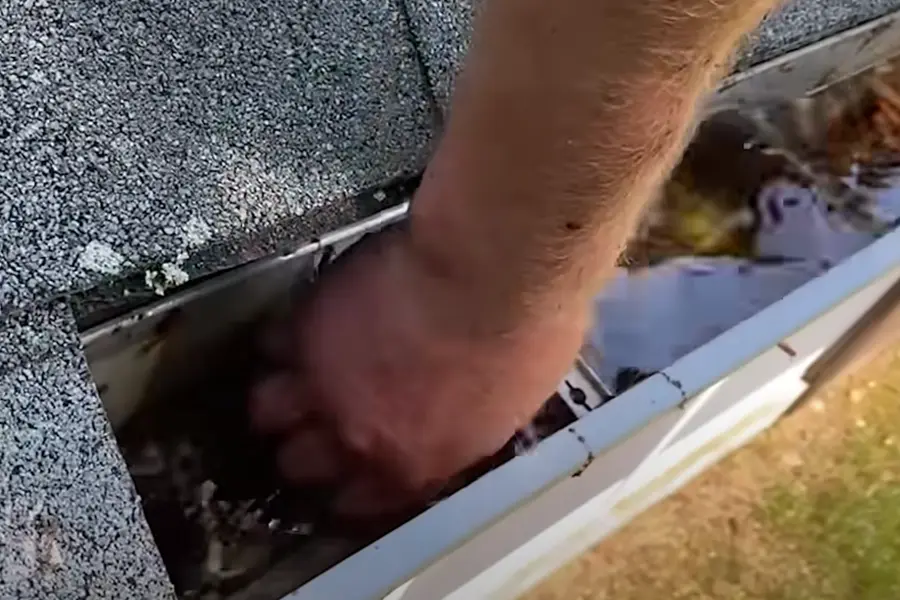
Clear the channels
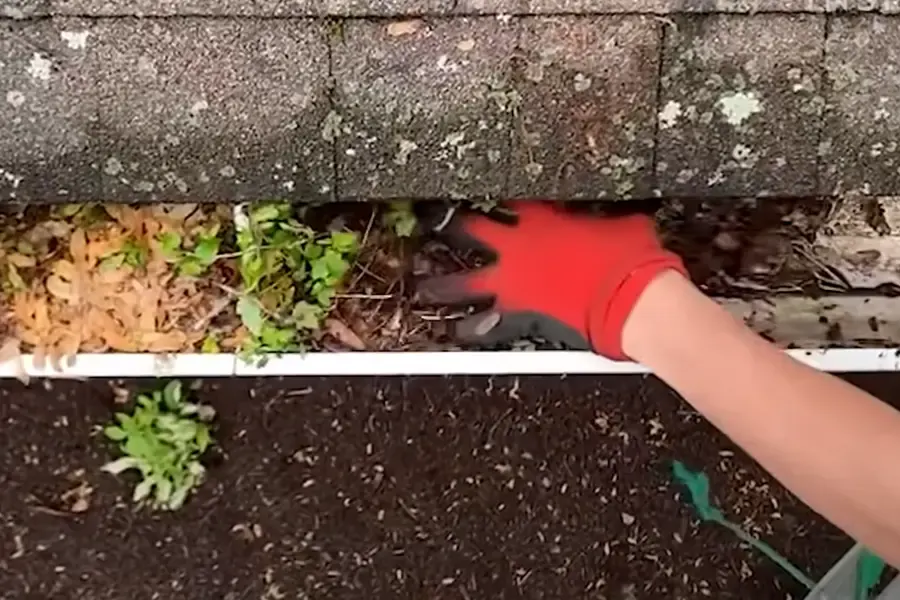
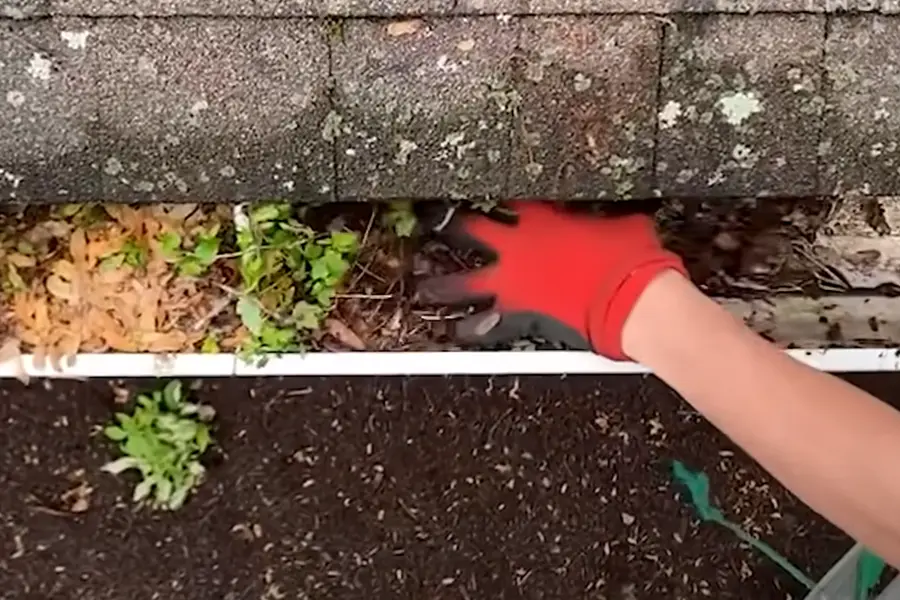
Gutter cleaning removes leaves, roof grit, seed debris, and compacted organic material from the runs and accessible downspout openings. The point is flow, not a quick pass across the top. Debris should leave the property with the crew instead of ending up in planting beds.

Fix the weak point
Gutter repair addresses loose sections, active seam leaks, disconnected downspouts, and other isolated faults. A sound system with one bad connection may only need focused work. If corrosion or distortion runs through the whole line, repair may not be the sensible choice.
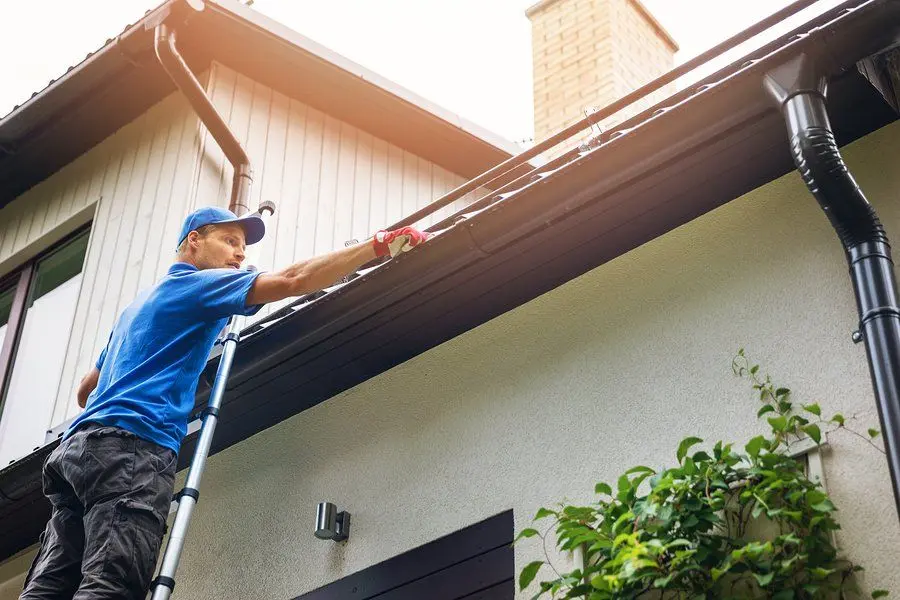
Choose guards carefully
Gutter guards can reduce large leaves, but they do not make a gutter maintenance-free. Fine material still lands on top or works through openings. The right question is whether a cover fits the tree debris, roof shape, and access problem at that particular house.

Replace a failed system
Gutter installation is for channels that cannot be restored with cleaning and limited repair. Layout matters. The replacement needs to meet the roof edge, move water toward working outlets, and connect to downspouts that discharge in a useful direction.

Deal with roof debris
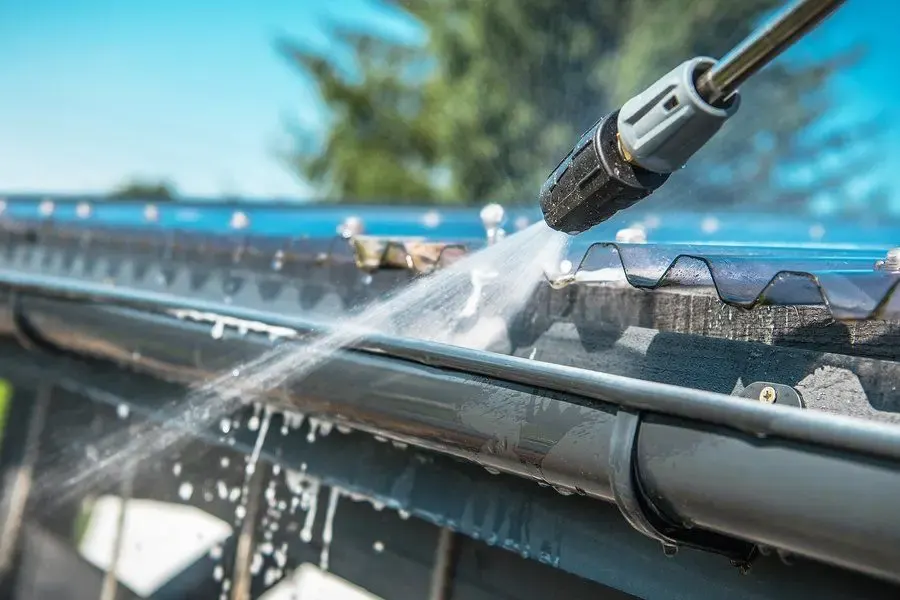
Roof cleaning focuses on loose organic material and visible buildup that holds moisture on shaded surfaces. The method has to respect the roofing. High pressure is not a universal answer, and a roof that is worn or damaged needs evaluation before cleaning.

Handle a simple job yourself
DIY gutter cleaning can make sense on a one-story home with firm, level ladder placement and an easy-to-reach edge. It stops making sense when the work involves a steep slope, a tall second or third story, ice, or a need to walk the roof.
What the Roofline Tells You First
You do not need to climb a ladder to spot every warning. Stand back during steady rain and follow the water. The pattern usually narrows the cause.
Water spills over one short section
A local spill often points to a packed outlet, a low spot, or one concentrated pile of debris. The downspout below that section may stay quiet while neighboring downspouts move water. Cleaning comes first. If the spill remains after the channel is clear, the pitch or position of the gutter may need attention.
Water runs behind the gutter
Water behind the channel can indicate a roof-edge or attachment problem rather than a simple clog. Staining on the fascia is a useful clue. Do not assume sealant across the front seam will solve water entering from above or behind.
The downspout ends beside the wall
An open gutter is only half a drainage system. Cincinnati’s clay-heavy soil and hillside lots make discharge placement important. Water released against the foundation or the uphill side of a retaining wall still creates a bad result. Extensions and outlet direction should be reviewed with the surrounding grade in mind.
The channel sags when it is dry
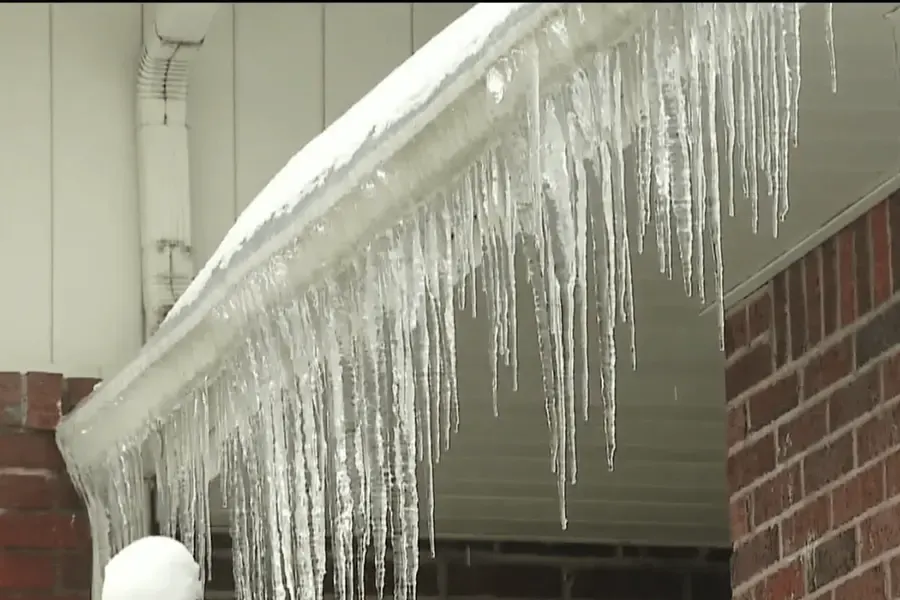
Standing debris and freeze–thaw cycles can add weight, but a dry sag suggests the supports or metal have already moved. Clearing the gutter prevents more load. It does not pull a distorted run back into proper alignment by itself.
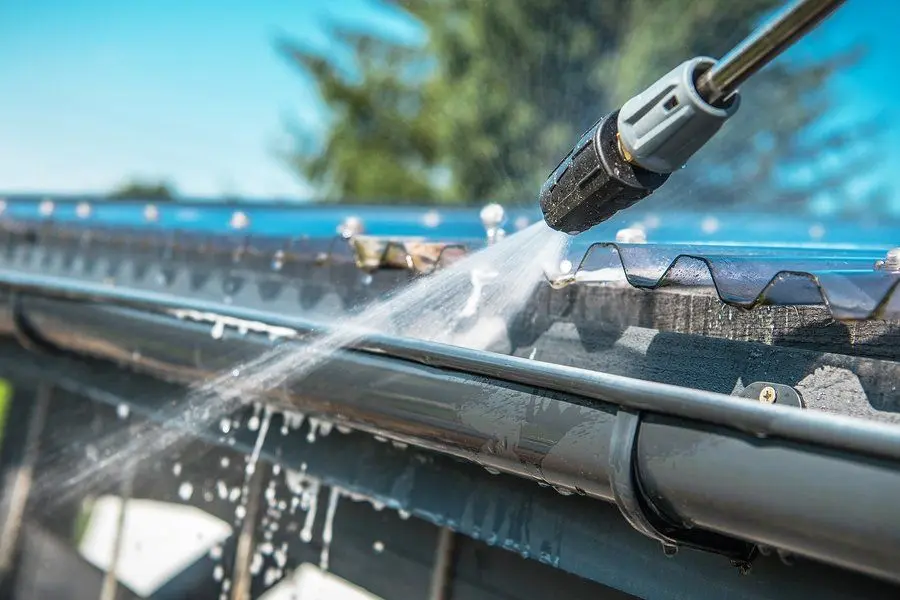
Cleaning for the Ohio Valley Cycle

There is no useful one-size schedule for every Cincinnati house. A roof under mature maples sees a different debris load than an open roofline. A shaded north-facing run stays damp longer than one exposed to sun. A tall house at the bottom of a slope is a different access problem from a one-story ranch on level ground.
Two seasonal rounds deserve attention. The first is spring, after flowers, catkins, pods, and helicopters have finished dropping. Fine material can bridge an outlet even when the large fall leaves were removed. The second is late fall, after most leaves are down and before trapped water begins cycling through freezes and thaws.
When It Makes Sense to Do It Yourself

A homeowner can often handle a small, visible pile in a low gutter. Use a stable ladder on firm, level ground. Keep your body between the rails. Move the ladder instead of leaning. Wear gloves and eye protection, and have another adult nearby. Scoop material into a container rather than throwing it across the yard.
Stop if the setup is wrong. Soft ground, a side slope, overhead lines, a steep roof, a tall reach, or cold slick surfaces are enough reason to stay down. Older two- and three-story Cincinnati homes can put an apparently short gutter far above a safe working position. Original half-round gutters on century homes also deserve care; aggressive prying can damage parts that are not easily replaced.
Cincinnati Gutter Cleaning FAQ
How can I tell whether the gutter or downspout is blocked?
Watch both during rain. Overflow beside a quiet downspout points toward the outlet or vertical run. Water moving from the bottom while the top spills may mean the system is undersized, poorly pitched, or receiving more water than that outlet can handle. Cleaning is still the first check because it removes the simplest cause.
Are spring seeds really enough to clog a gutter?
Yes. Catkins, helicopters, and small pods tangle together and catch roof grit. In a damp shaded run, that material compresses quickly. The blockage may sit directly over the outlet and remain hard to see from below.
Do I need guards under mature trees?
Not automatically. If a low roof is easy to clean, the cost and maintenance of guards may not improve the situation. Guards become more useful when large leaves are the main debris and repeated access is difficult. Fine material still has to be considered.
Why does a clean gutter still drip at a seam?
Cleaning restores flow but does not close an opened joint. Once the channel is dry, the seam and surrounding metal can be inspected. A focused repair may work when the nearby material is sound. Widespread corrosion points toward replacement.
Can overflowing water affect a retaining wall?
It can add water where you do not want it, especially on the uphill side of a wall. The specific condition of a foundation or retaining wall is outside gutter work, but moving roof water to a suitable discharge point reduces unnecessary saturation beside those structures.
Is roof staining always caused by the gutters?
No. Roof marks may come from algae, moss, airborne dirt, metal runoff, or material wear. Overflow can stain fascia and siding below the edge, but the location and pattern need to be read before choosing a service.
What should I describe when asking for a quote?
Give the number of stories, whether the ground slopes, the roof pitch if known, visible guards, the length of the problem area, and what happens during rain. Mention half-round gutters or unusual downspout routing. Call (513) 982-5740 for a free quote and a straightforward discussion of the next step.
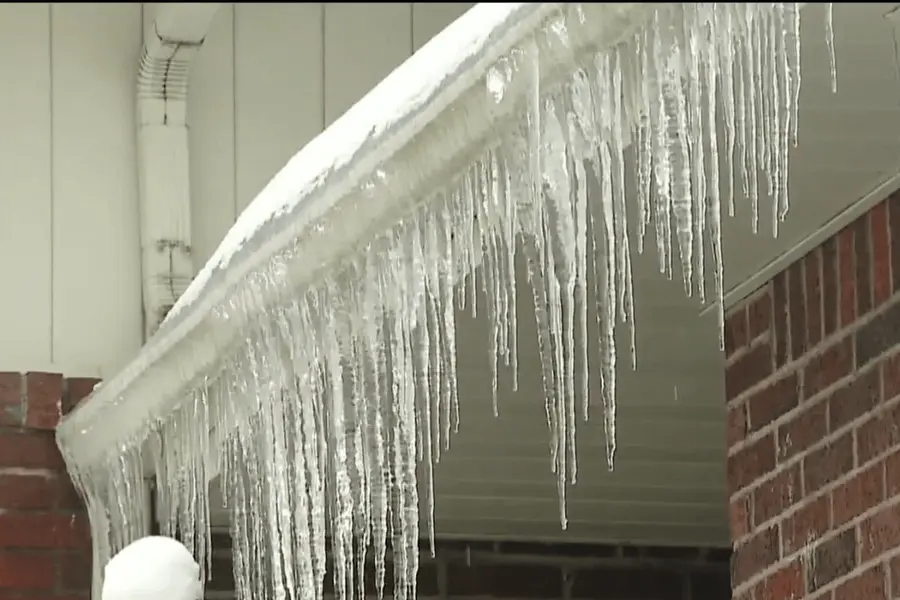
Walk the Discharge Route
Before requesting work, follow each downspout from the roofline to its ending point. Note an elbow that has separated, an extension that was moved, or a hillside outlet aimed back toward the house. The channel can be clean while the last part of the route still concentrates water beside a foundation or retaining wall. We treat that observation as part of the drainage picture, not proof that the gutter itself needs replacement.
Give us the full Cincinnati-area address and the county when the property is outside Hamilton County. Add the number of stories, grade below the eaves, tree cover, gutter shape, guards, and the exact location of the symptom. That is enough to begin with the water path instead of a generic package.