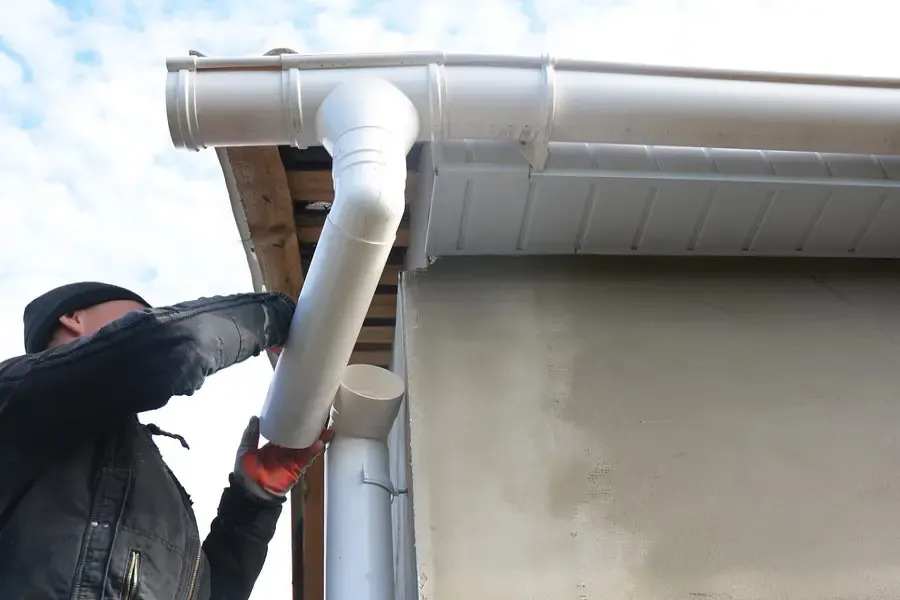
Clean the Entire Water Path
Gutter cleaning is not just grabbing the leaves visible from the driveway. The working path begins where roof water enters the channel, continues through each outlet and elbow, and ends where the downspout releases it. One packed opening can make a long, otherwise empty run overflow.
Cincinnati gutters tend to get two distinct debris loads. Oaks, maples, and sycamores send down broad leaves in fall. Spring brings pods, catkins, and helicopters. Fine material catches roof grit and stays damp in Ohio Valley humidity. It breaks down into sludge that can sit below a screen or seal an outlet beneath a layer that looks harmless.
What a Cleaning Addresses
The work begins with loose and compacted debris in reachable gutter runs. Accessible outlet openings are cleared, and the downspout path is checked for signs of a blockage. The removed material should be collected and hauled away instead of tossed into landscaping.
After the channel is open, the roofline can be observed for separate defects. A leaking seam, loose fastener, disconnected elbow, or visibly distorted section is not a cleaning problem. Those items belong in a gutter repair discussion. Keeping the scope separate prevents a simple debris job from turning into vague, unnecessary work.
Signs worth checking from the ground
- Water spilling over one short section during steady rain
- A downspout that stays quiet while nearby outlets are moving water
- Plants, dark composted material, or seed debris visible above the channel
- A wet stripe on siding or fascia below the gutter edge
- Water collecting beside a foundation or retaining wall
Overflow at the bottom of a hill deserves prompt attention because the lot may already be directing surface water toward the house. Cincinnati’s clay-heavy soil drains slowly. Opening the gutter helps, but the downspout still needs a useful discharge direction.
Timing Without an Automatic Schedule
Inspect after the spring seed drop and after most autumn leaves are down. Those are sensible checkpoints, not a rule that every home needs paid service twice a year. A roof with little tree cover may remain open longer. A shaded run under mature maples may need attention sooner.
Look safely into a low gutter if the setup allows. If the channel is clear, the outlet is open, and rainwater is moving correctly, it may not need cleaning yet. Check again after the next debris cycle. Guards should also be inspected; fine wet material can mat on top or settle underneath.
Know When the Ladder Is the Real Problem
A one-story gutter on level ground can be reasonable DIY work. Tall older homes, steep rooflines, and hillside lots change the risk. Soft soil, side slopes, icy surfaces, overhead lines, and a need to lean beyond the ladder rails are clear reasons to stay down. See the DIY gutter cleaning guide before deciding.
For a free quote, describe the number of stories, slope, guards, and what happens during rain. Call (513) 982-5740. We’ll start with the symptom and tell you whether cleaning sounds like the right first move.
Check the Outlet After the Debris Is Gone
A Cincinnati spring clog can sit directly where a channel meets the downspout. Catkins, seed pods, roof grit, and damp leaf fragments pack into a small opening even when most of the run looks empty. After cleaning, the outlet and accessible elbows still need attention. During the next safe observation from the ground, confirm that the downspout is carrying water and that its extension has not shifted toward the foundation or the uphill side of a retaining wall.