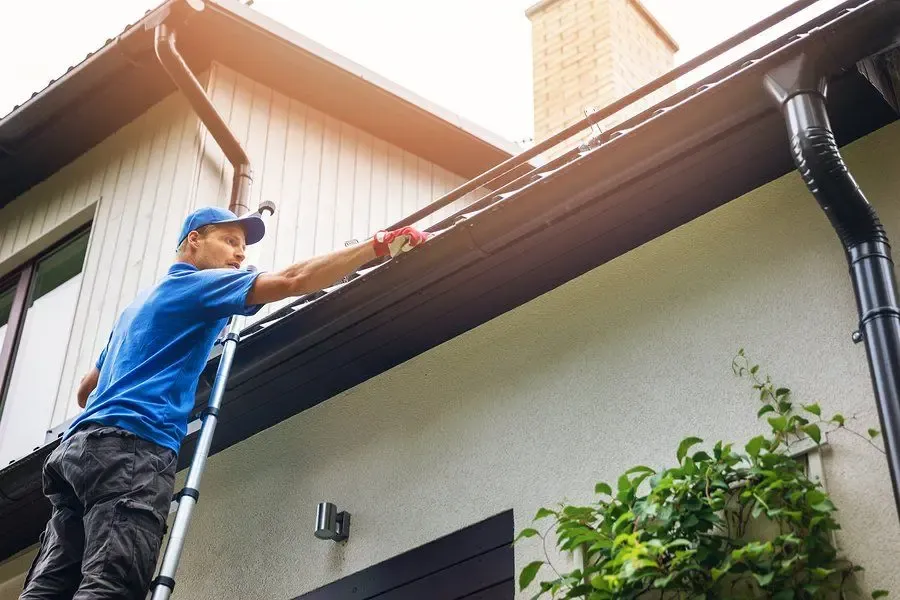
Guards Change Maintenance; They Do Not End It
Gutter guards can reduce the amount of large debris entering a channel. They cannot stop every seed, piece of roof grit, or wet organic particle. Under Cincinnati maples, oaks, and sycamores, that distinction matters. Autumn leaves are only part of the load. Spring catkins, pods, and helicopters can bridge openings or settle into fine mesh.
Ohio Valley humidity adds another complication. Debris that stays shaded and damp breaks down into sludge. A screen may keep out a whole leaf while allowing the smaller material below it. A surface cover may shed broad debris but collect a wet band where water turns around the edge.
Common Guard Approaches
Open screens
Screens block larger leaves and are easy to understand. Their wider openings can admit small seeds and roof grit. Material can also lodge in the screen itself. They make the most sense where broad, dry leaves are the main issue and the top remains reachable for inspection.
Fine mesh
Fine mesh rejects smaller debris than an open screen. It can still hold a layer on top, especially in shade. Water has to pass through the exposed mesh, so accumulated pollen, grit, and decomposed material should not be ignored.
Surface-tension covers
These covers ask water to follow a curved surface into a narrow opening while debris moves past the edge. Roof pitch, water speed, valleys, and alignment affect that turn. The opening and front edge still need to be checked for buildup.
Simple inserts
Brush or foam-style inserts occupy space inside the gutter. They can catch debris rather than sending it away, and trapped material may be awkward to remove. They should be evaluated as maintenance products, not invisible permanent fixes.
When Guards May Not Be Worth It
If a one-story gutter is easy to reach from firm, level ground and only needs occasional clearing, a cover may cost more effort than it saves. Guards also provide less benefit when fine organic material is the dominant problem. A house with a damaged or badly pitched system needs repair first; covering the channel does not correct the underlying fault.
Guards become more attractive when repeated large-leaf loading meets difficult access. Even then, plan for inspection. The top surface, valleys, outlet area, and channel beneath should remain serviceable. Avoid a system that makes future gutter cleaning unnecessarily destructive.
Start With Debris, Not a Brand Name
Look at what actually lands on the roof. Broad leaves behave differently from catkins. A sunny roof edge dries faster than a shaded north side. A steep valley may concentrate more water and debris than a straight eave. Those conditions matter more than a universal claim about one guard style.
Call (513) 982-5740 to discuss the roofline and request a free quote. If guards are unlikely to improve the maintenance tradeoff, the honest recommendation is to keep the existing gutter accessible and clean it when it is actually needed.
Plan for Spring Material Too
Do not judge a Cincinnati guard only by the autumn leaf drop. Maple helicopters, oak catkins, small pods, and decomposed grit create a finer spring load. Ask how the top surface will be cleared, how outlets remain reachable, and whether an older half-round run can be inspected without damaging it. A guard is useful only when the remaining maintenance is safer and more practical for that particular roofline.